


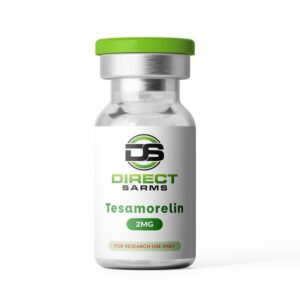

What Is Tesamorelin?
Tesamorelin is a synthetic peptide analogue of human growth hormone-releasing hormone (GHRH). Published literature describes it as a 44-amino-acid analogue of human GHRH, with a hexenoyl modification at the N-terminal tyrosine residue. This structural modification distinguishes Tesamorelin from the native GHRH peptide.
Tesamorelin is therefore classified as a synthetic GHRH or growth hormone-releasing factor analogue. Its molecular structure is based on the naturally occurring GHRH sequence, with the N-terminal modification incorporated into the peptide structure.
Research Overview Table
Chemical and Molecular Characteristics
Tesamorelin is a synthetic 44-amino-acid analogue of human growth hormone-releasing factor. Published work describes its structure as human GHRF(1–44)NH₂ with a trans-3-hexenoyl group added to the Tyr1 residue. This modification gives Tesamorelin a structure distinct from the native GHRF peptide.
The peptide therefore belongs to the synthetic GHRF/GHRH analogue class. Its defined amino acid sequence, N-terminal modification and C-terminal amide are the main structural features that distinguish it from native GHRH and shorter GHRH-derived peptides. These characteristics define Tesamorelin as a specific modified peptide molecule rather than a naturally occurring peptide.
Certificates:
Mechanism of Action Under Investigation
Tesamorelin is a synthetic analogue of growth hormone-releasing hormone (GHRH) that acts at the growth hormone-releasing hormone receptor (GHRHR) on pituitary somatotroph cells. GHRHR is a G protein-coupled receptor. Its activation stimulates adenylyl cyclase and increases intracellular cyclic AMP, a signaling event associated with GHRH-induced growth hormone secretion.
Tesamorelin-specific studies have shown increased growth hormone secretion following exposure to the peptide. Subsequent increases in circulating insulin-like growth factor 1 (IGF-1) have also been documented. Pharmacodynamic modeling of Tesamorelin further describes the relationship between Tesamorelin exposure, growth hormone secretion and the resulting IGF-1 concentrations.
The published evidence therefore supports GHRHR-mediated stimulation of the somatotropic axis as the central mechanism investigated for Tesamorelin.
Scientific Research Context
Tesamorelin has a relatively mature evidence base spanning early peptide development, preclinical investigation, pharmacological studies, and controlled human clinical research. The literature progressed from characterization of the GHRH analogue to larger clinical investigations. Current evidence therefore includes both preclinical and human research, with the latter forming a substantial part of the published record.
Tesamorelin Biology and Biological Pathways
Primary Biological Function
The GHRH system is part of the hypothalamic–pituitary growth hormone axis. Its biological role is to regulate somatotroph activity and maintain the normal pattern of growth hormone secretion. Growth hormone then participates in the broader GH–IGF-1 endocrine system. Tesamorelin research has therefore examined this biological axis together with adipose, hepatic, and metabolic biology.
Relevant Metabolic or Signalling Pathways
The GH–IGF-1 axis is linked with lipid and glucose metabolism and broader tissue metabolic regulation. In Tesamorelin research, hepatic transcriptomic analysis has identified changes in pathways related to oxidative phosphorylation, inflammation, tissue repair, and cell division. These findings have expanded investigation beyond endocrine signaling toward hepatic metabolic and cellular pathways.
Tissue-Specific Biology
Tesamorelin research has examined several tissues, with particular attention to visceral adipose tissue and the liver. Human studies have evaluated visceral fat and hepatic fat separately, while liver-biopsy studies have examined tissue-level gene expression and immune-related biological signatures. This work provides tissue-specific information on how the GH-related biological system relates to adipose and hepatic biology in the studied populations.
Experimental Biomarkers
Markers used in Tesamorelin research include growth hormone, IGF-1, triglycerides, glucose, insulin, glycated hemoglobin, inflammatory proteins, and measures of hepatic and visceral fat. Liver studies have additionally examined circulating proteins and tissue gene-expression signatures. These markers allow different components of endocrine, metabolic, hepatic, and inflammatory biology to be examined separately.
Laboratory Investigation Methods
Tesamorelin-related biological research has used repeated blood sampling to characterize GH secretion, biochemical measurements for circulating hormones and metabolic markers, imaging to quantify visceral and hepatic fat, and liver biopsy analysis for tissue-level investigation. More recent studies have also used proteomic profiling and gene-set enrichment analysis to examine broader biological patterns in liver tissue.
Experimental Models Used in Published Research
The published nonclinical literature on Tesamorelin (TH9507) includes rats, dogs, and pigs. These models were used in the compound’s preclinical development. Their limitations mainly concern species differences in endocrine physiology, peptide disposition, and exposure.
Rat Models
Rats were included in repeat-dose and nonclinical safety studies of TH9507. The principal limitation is species-specific growth hormone physiology and peptide handling, which can differ from human biology and limit direct translation of findings.
Dog Models
Dogs were included in the nonclinical TH9507 studies with repeat-dose work conducted to assess the compound in a non-rodent species. A separate study used male Beagle dogs to examine pulmonary administration. The main limitation is species-specific pharmacokinetics and endocrine physiology, which can limit translation to humans.
Pig Models
Pigs were included in the nonclinical evaluation of TH9507. Their limitation is that porcine endocrine physiology and peptide handling are not identical to human biology, so findings from this model cannot be directly generalized to humans.
Published Scientific Research
Visceral Adipose Tissue and Body Composition
Researchers have investigated Tesamorelin primarily in relation to visceral adipose tissue and body composition. Published clinical studies have examined visceral fat, trunk fat, waist circumference, subcutaneous fat, and lean body mass. Research has also assessed whether changes in visceral fat were maintained during continued treatment or changed after treatment discontinuation.
Hepatic Fat and Liver Biology
Tesamorelin has been studied in relation to hepatic fat, liver histology, fibrosis and hepatic molecular signatures. Clinical research has measured liver fat and assessed liver biopsies, including studies of hepatic gene expression and circulating proteins linked to inflammatory and fibrotic pathways. These investigations have examined liver-related changes as a distinct area of Tesamorelin research.
Metabolic and Lipid Measures
Researchers have investigated Tesamorelin alongside metabolic measures including triglycerides, cholesterol, glucose, insulin and IGF-1. These measures were examined in clinical studies involving people with HIV-associated abdominal adiposity and in adults with obesity and reduced GH secretion. The published studies assessed whether metabolic measures changed alongside changes in visceral adipose tissue.
Adipose Tissue Quality
Researchers have investigated whether Tesamorelin-related changes extend beyond the amount of adipose tissue to its measured density. A secondary analysis of two randomized trials assessed visceral and subcutaneous adipose tissue density using CT-derived Hounsfield units. The study specifically examined adipose tissue density in relation to changes in fat quantity.
Skeletal Muscle Characteristics
Tesamorelin has also been studied in relation to skeletal muscle area and muscle density. An exploratory analysis of two randomized clinical trials examined changes in four trunk muscle groups using CT measurements. The study assessed both muscle quantity and density, adding skeletal muscle characteristics to the broader body composition research on Tesamorelin.
Neurocognitive Function
Tesamorelin has been investigated in relation to cognitive function in older adults and in people with HIV and abdominal obesity. Earlier research assessed executive function, verbal memory and visual memory. A later Phase 2 trial examined neurocognitive performance over six months in people with HIV and abdominal obesity.
Limitations of Current Research
Evidence Is Predominantly Preclinical
This limitation does not accurately describe Tesamorelin. The published evidence includes several randomized human clinical trials, including Phase 3 studies and longer clinical investigations. Therefore, Tesamorelin research should not be characterized overall as predominantly preclinical.
Human Clinical Evidence
Human clinical evidence is limited by the characteristics of the populations studied. Much of the published evidence comes from people with HIV and abdominal adiposity, while smaller trials have examined specific groups such as people with HIV-associated NAFLD or type 2 diabetes. These population differences limit how broadly findings from individual studies can be generalized.
Species Differences
Animal studies cannot fully predict human responses. Published TH9507 research showed species-dependent differences in peptide degradation and exposure in rat, dog and human plasma. Pharmacokinetic findings also differed between animal species. These differences limit direct extrapolation of nonclinical pharmacokinetic and safety findings to humans.
Study Design Limitations
Individual studies have differed in participant numbers, study duration, populations, and outcomes measured. Some later publications also used secondary analyses of previously conducted randomized trials. For example, the 12-month HIV-associated NAFLD trial enrolled 61 participants, limiting the size of some subgroup and tissue-level analyses.
Independent Replication
The principal visceral-adipose findings have been examined across multiple randomized trials and subsequent analyses. However, some newer research areas have a smaller evidence base. Liver transcriptomic and immune-related findings, for example, were derived from participants in clinical trials rather than repeated across numerous independent tissue studies.
Long-Term Evidence
The available evidence on long-term outcomes remains limited. Published studies provide extended follow-up but evidence beyond the periods examined in these trials is less established. In particular, longer-term data remain limited for liver histology and the durability of changes observed during treatment.
Analytical Documentation
HPLC is useful for assessing the chromatographic purity of Tesamorelin. LC-MS adds molecular-mass information and has been used specifically for identifying Tesamorelin in human plasma and urine. Published analytical studies have applied LC-HRMS/MS and UHPLC-MS/MS methods for selective detection of the peptide.
NMR may provide additional structural information during peptide characterization, although the Tesamorelin-specific analytical studies identified here rely mainly on chromatography and mass spectrometry. A Certificate of Analysis (CoA) provides batch-specific analytical results, such as identity and purity, and links those results to the material tested.
Analytical verification is important in laboratory research because the identity and quality of the material need to be established before experimental use. Analytical documentation verifies product identity and quality, rather than biological performance.
Storage and Laboratory Handling
Store Tesamorelin at 2–8°C, following the storage conditions stated in the product documentation. Keep the material under the specified conditions during laboratory storage and avoid unnecessary exposure to conditions that may affect peptide stability.
Handle Tesamorelin using appropriate laboratory practices and by qualified personnel. Prevent contamination during handling and keep the material properly contained when not in use. Tesamorelin supplied for research purposes is intended for laboratory research use only.
Frequently asked questions
Why choose us?
Direct SARMs is an established supplier of research peptides. We are committed to product quality, reliable service, and helpful customer support.
Our European-made products undergo rigorous purity testing, with clear product information provided for each research material. We also aim to provide dependable shipping and a smooth ordering experience.
Our support team is available to assist with orders, shipping, payments, and general questions. At Direct SARMs, we aim to make the research supply process simple, clear, and reliable.